
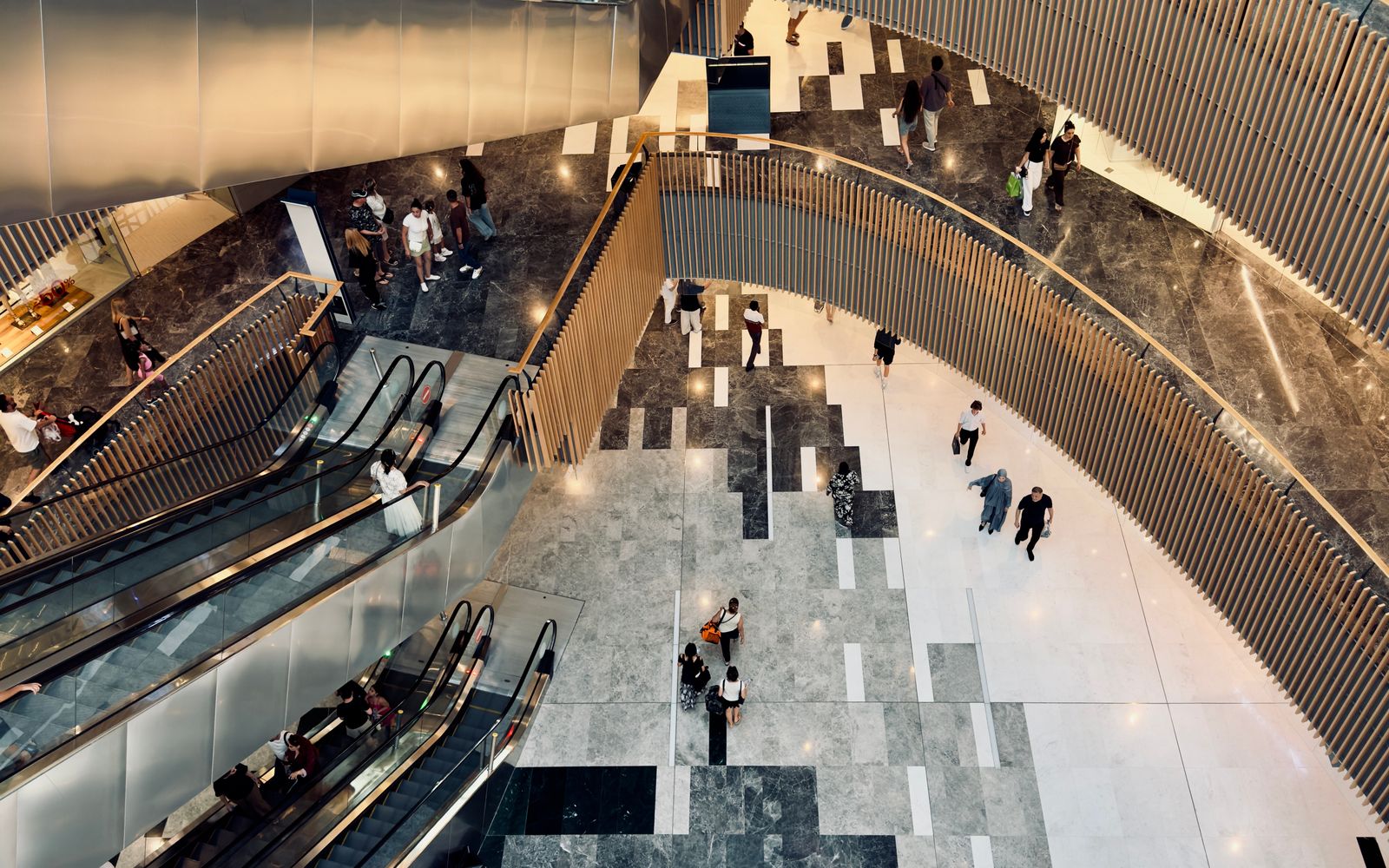
In August 2022, INCLEAN reported on a Gold Coast shopping centre where a Gausium Scrubber 75 worked alongside a night cleaning crew. It could run without intervention for almost five hours, freeing the team to focus on detail work.
At the time, it felt like an early glimpse of a different cleaning routine. Four years on, several of the industry’s expectations look well founded. Here is our scorecard.
The 2022 scorecard
The earlier views below are paraphrased from INCLEAN’s reporting; the 2026 assessments are our editorial interpretation.
01 / THE 2022 CALL
Smaller, simpler machines would become more practical.
Steve Bagshaw, i-team Australia & NZ
Where it stands in 2026
That direction holds. Tennant announced its compact X2 ROVR SCRUB in May 2026 for small, high-traffic spaces. Its circular footprint allows it to pivot in place. Compact design is widening the range of floors that can be automated.
02 / THE 2022 CALL
Labour shortages and high wages would strengthen the business case.
Tom Culver, Gausium
Where it stands in 2026
The cost pressure remains. Minimum award wages increased by 4.75% from the first full pay period on or after 1 July 2026, subject to the minimum-rate provisions. The super guarantee had already reached 12% on 1 July 2025.
03 / THE 2022 CALL
A large upfront investment would need a convincing return.
Steve Bagshaw, i-team Australia & NZ
Where it stands in 2026
Still true. GJK Facility Services identifies leasing or financing as ways to manage initial cost, alongside pilot programs that test suitability before a broader rollout.
04 / THE 2022 CALL
Early adopters would incorporate robots into routine floor maintenance.
Brant Insero, ISSA
Where it stands in 2026
Adoption has expanded. Counterpoint Research reports more than 50,000 commercial cleaning robots shipped globally in 2025, generating over US$400 million in revenue. Those global totals show scale, rather than proving a return at any individual Australian site.
05 / THE 2022 CALL
Robots would use resources more efficiently and keep teams informed.
Joe Camilleri, Central Cleaning Supplies
Where it stands in 2026
The direction continues. Pudu announced the BG1 Series in March 2026, ahead of April exhibition debuts, with AI-led cleaning and adaptive resource use. Actual water, chemical and labour savings still need to be measured on site.
What moved faster than expected
The striking change is how much more attention manufacturers now give to perception and decision-making. Mapping and battery life still matter, but so does recognising obstacles, identifying dirt and deciding where extra cleaning is needed.
Counterpoint’s 2026 review places Pudu first in commercial cleaning robot shipments and revenue within its research scope. Manufacturer shipment totals across all service-robot categories should not be treated as cleaning-only totals or compared directly with another company’s installed fleet.
Gausium’s February 2026 technology commentary describes perception capable of identifying more than 100 semantic object types. The practical question has expanded: can a robot navigate this site, understand what it encounters and deliver a consistent clean?
What this means if you are buying
The barriers have not disappeared. GJK highlights capital cost, staff acceptance, workflow integration and technical support. Better machines still need the right deployment plan.
Rising labour costs can strengthen the case for automation, but savings depend on the hours that can actually be reassigned, the cleaning result and the full cost of ownership. Include maintenance, consumables, servicing and operator time in the comparison.
Start with one site, one shift and one machine. Measure floor coverage, cleaning quality, human intervention and resource use before scaling. A representative trial gives you a stronger basis for a decision than a market growth headline.