
The site: two shifts and a changing warehouse floor
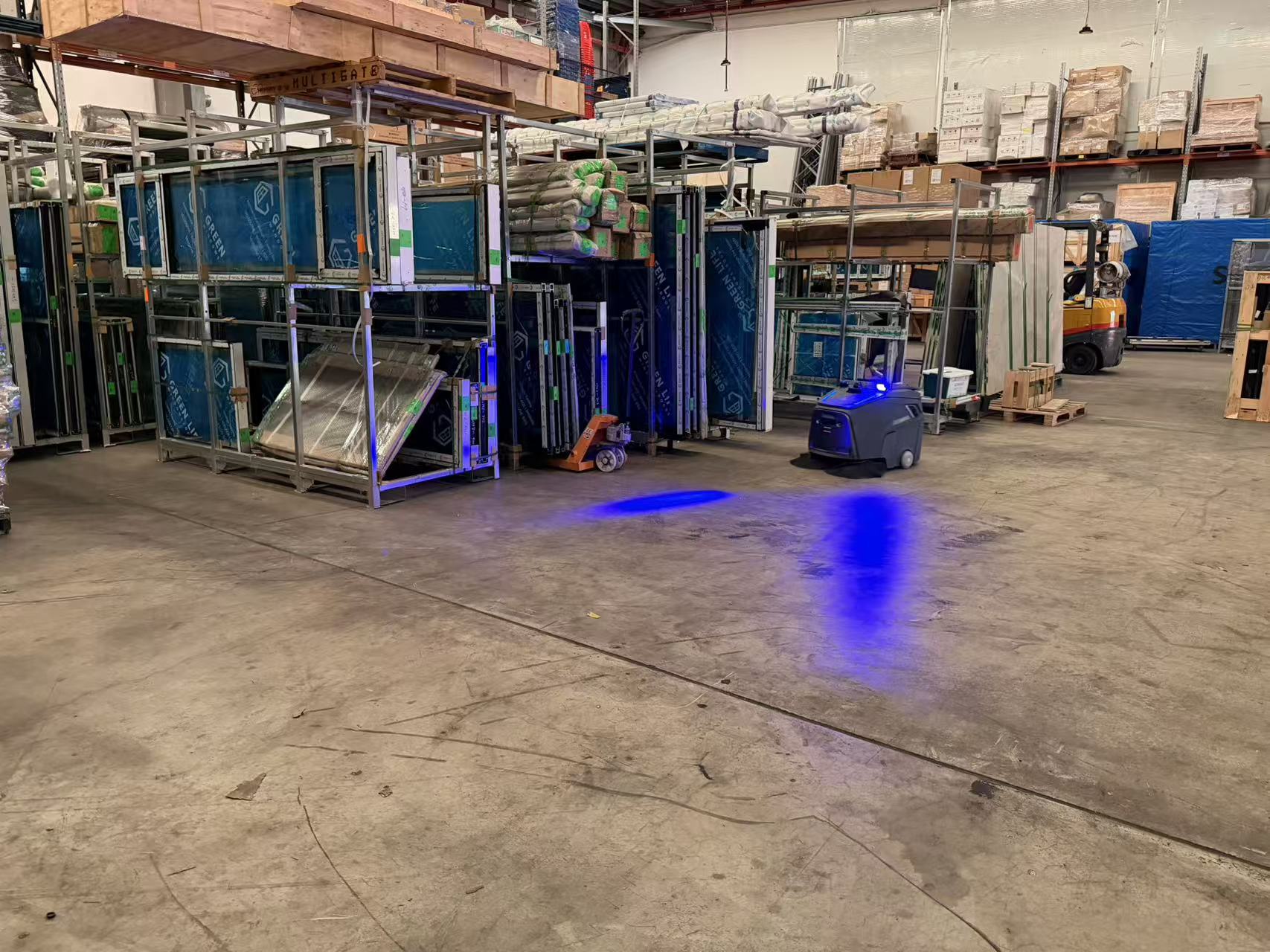
This Sydney third-party logistics (3PL) warehouse operates across two shifts. Floor cleaning needs to fit around the working day, while also addressing the loose material that accumulates around stored goods and warehouse traffic routes.
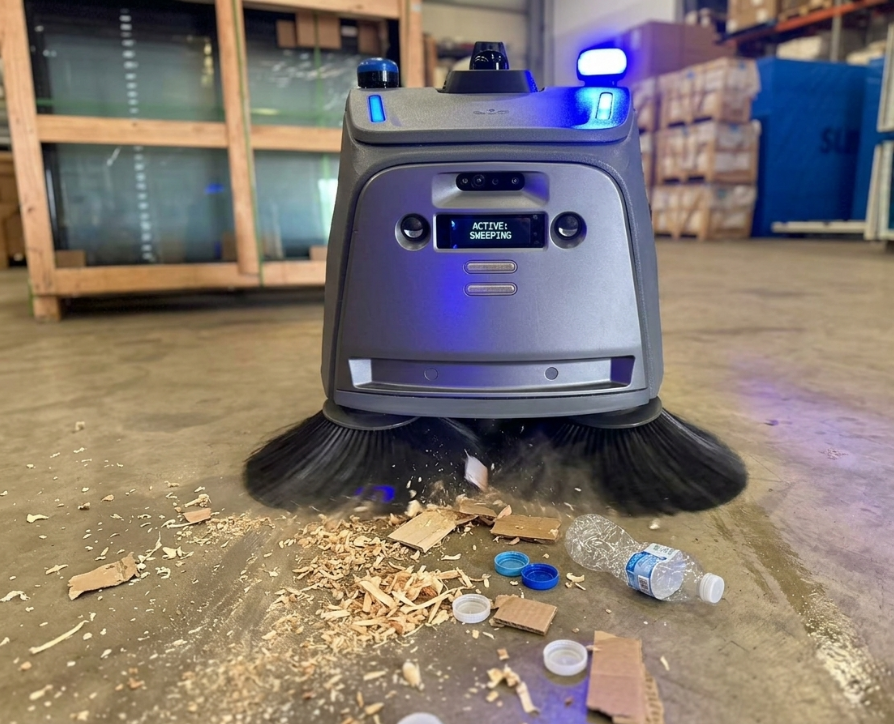
The deployment photographs show concrete flooring, closely arranged storage racks and mixed loose debris, including cardboard, wood fragments, dust and plastic packaging. This is a dry-sweeping task: collecting material from the floor before it builds up or is carried further through the warehouse.
The deployment: two complementary cleaning routines
Full-coverage sweeping
Every night, once the warehouse closes, Beetle carries out a full-coverage sweep of the accessible cleaning area.
Spot Clean every 4 hours
During operations, a Spot Clean run is scheduled every four hours to address localised debris between the nightly sweeps.
Nightly coverage: prepare the floor for the next working day
The overnight run provides the main cleaning cycle. Scheduling it after closing separates broad floor coverage from the two-shift operation and gives the robot an opportunity to work through the accessible warehouse floor without the same level of daytime activity.
The scope is the floor available to the robot along its cleaning route. Areas occupied by pallets, stored goods or other obstructions need to be kept accessible if they are to be included in that night's sweep.
Daytime Spot Clean: manage debris as work continues
A full sweep at night is only one part of the routine. The four-hour Spot Clean interval adds recurring cleaning opportunities during working hours, helping address fresh loose debris before the end of the day.
This gives the site a repeatable rhythm: broad coverage after closing, with targeted upkeep throughout the working period. The schedule is based on the warehouse's operations rather than a fixed clock time, so it does not assume particular shift start or finish times.
What the cleaning results show
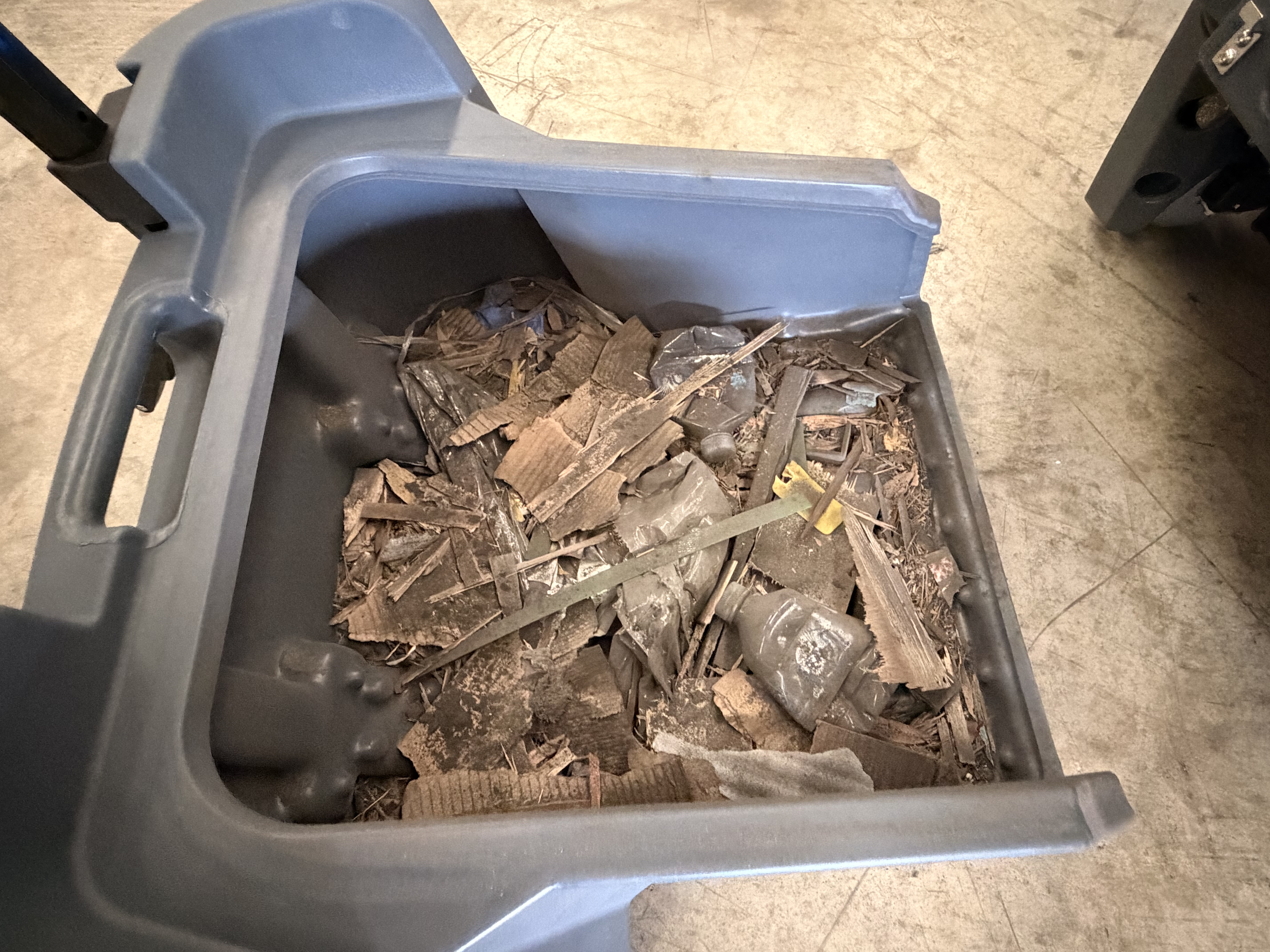
The most direct evidence is the collected material. The debris-bin photograph shows dust, cardboard, wood fragments and plastic items gathered into the robot's bin. It illustrates the variety of loose waste being removed from the floor during the deployment.
The warehouse photograph also shows broad stretches of exposed concrete around the robot and storage racks. Together, the images document active sweeping and collected debris; they are not a matched before-and-after comparison of the entire facility.
A more consistent approach to warehouse cleanliness
The combined schedule is designed to keep loose-waste accumulation under control across the working day. Overnight sweeping resets the accessible floor, while four-hourly Spot Clean runs help maintain that condition between full cleans. The practical aim is a tidier warehouse floor that receives regular attention across both shifts.
Beetle's role here is dry debris removal. Existing concrete wear, tyre marks and embedded stains remain a separate floor-care task; sweeping should not be confused with wet scrubbing or floor restoration.
Keeping the routine effective
To sustain this cleaning pattern, the operating routine should include keeping agreed routes accessible, checking and emptying the debris bin, inspecting brushes and filters, and reviewing any incomplete cleaning areas. Changes to storage layouts should be reflected in the cleaning plan.
These are ongoing operating considerations, alongside the site's confirmed nightly and four-hourly schedule. They help turn a robot deployment into a repeatable part of warehouse housekeeping.
A practical fit for a two-shift logistics site
This deployment brings together two different needs: full-floor attention when the warehouse is closed and targeted cleaning while the business is operating. For a 3PL facility handling mixed goods and packaging, that combination provides a structured way to manage dry debris without leaving all cleaning until the end of the day.
Case details and photographs supplied by the Australian deployment team. Cleaning outcomes are described qualitatively; no measured before-and-after cleanliness score, labour saving or productivity figure is claimed.